Looking ahead: how to reign in inflation and maintain stable growth
Contribution by Athanasios Orphanides, Governor of the Central Bank of Cyprus, to the 4th Debate of The ECB and its Watchers conference
Frankfurt, 5 September 2008
I'm grateful to my friend and former colleague, Volker Wieland, for the invitation to participate at the 10th anniversary meeting of "The ECB and its Watchers". Since my current ECB Governing Council colleague, Axel Weber, started the organization of these meetings back in 1999, the ECB watcher conferences have provided an invaluable platform for evaluating, explaining and exchanging views regarding all aspects of ECB policy and strategy.
The task Volker has given to Larry Meyer and me for this session is to reflect on how to control inflation and achieve and maintain stable growth. This is a hearty perennial in monetary economics. As an example, about half a century ago (and before he became Federal Reserve Chairman) Arthur Burns had written on how to achieve "Prosperity without Inflation" (Burns, 1957). Volker's invitation reminded me of this particular example because I recall that when Larry was a Governor at the Federal Reserve Board a decade ago, Volker and I had a conversation with him about this very topic. So a decade later, I appreciate the opportunity to share the floor with Larry to reflect on this issue. But before I proceed I should note that the views I express are my own and do not necessarily reflect those of my colleagues on the Governing Council of the European Central Bank.
Inflation in the euro area has remained considerably above the level consistent with price stability since the fall of last year, and this poses a critical challenge for the ECB. [Figure 1.]
The recent peak---4 percent in June and July---has been unprecedented in the history of the Eurosystem and the latest figure recorded for August---3.8 percent---does not suggest rapid improvement.
To a considerable extent, the increase in inflation over the past year reflects the global increase in the prices of food, energy, and other commodities rather than an underlying trend. Looking at a measure of core inflation that excludes energy and unprocessed food, for example, the recent pickup in inflation is certainly much less dramatic, though still worrisome.
This opening of the spread between total and core measures of inflation is a manifestation of an adverse supply shock for our economy, not dissimilar from earlier experiences of such shocks. The evolution of the price of crude oil represents an important component of this shock. [Figure 2.]
Oil prices have risen quite dramatically in recent years. Recall that while at the beginning of 2002 the price of a barrel of crude was about 20 dollars, by 2006 prices had tripled, hovering around 60 dollars. But the recent acceleration from January 2007 until July of this year was even more dramatic bringing back bad memories from the 1970s. Indeed, with the peak reached in July this latest episode suggests an increase in prices not dissimilar to those we saw in the unhappy episodes of 1973 and 1979. [Figure 3.]
Memories of the 1970s can be particularly traumatic for central bankers. Stagflation---high and volatile inflation, coupled with rising unemployment and anaemic growth --- is not an item on any policymaker's wish list.
Although oil prices, as well as the prices of other commodities, have eased somewhat since July, the damaging effect of the past increases on our economy remain and continue to invite questions about the appropriate policy response.
Adverse supply shocks can all have a similar initial impact. But beyond the initial effect, the damage they eventually cause in the economy depends on various other factors. Importantly, the damage depends on the response of monetary and fiscal policy to the initial shock and the underlying policy strategy.
In my remaining remarks, I will focus on what I consider are some key elements of policy that can best contribute to reigning in inflation and securing stable and sustainable growth in the face of an adverse supply shock.
To facilitate the analysis of adverse supply shocks, it is useful to distinguish between the largely unavoidable first round effects and the later effects where policy can have a crucial role.
With regard to inflation, an increase in oil prices, coupled with downward rigidities in the levels of other prices, brings about an increase in the aggregate price level---the first round effect on inflation. The size of the effect is less pronounced if downward rigidities are less prevalent---one of the many examples of the economic efficiency benefits of flexibility.
Oil price increases for oil importing economies can also be expected to result in a reduction in aggregate demand. Consumer purchasing power is curtailed, and the reduction in expected future real incomes could induce a substantial first round reduction in aggregate demand. A decline in consumer confidence and ensuing uncertainty in business conditions may also dampen fixed capital investment, suggesting further weakness in economic activity. On the other hand, the quest for energy efficiency could be a countervailing factor, boosting the demand for energy-efficient consumer durables and capital equipment.
More vexing for an oil importing economy may be the effect of the shock on the economy's potential supply(1). An increase in the international price of oil could have important negative effects on the productivity of existing labour and capital resources and for the economy's overall productive potential. Energy intense technologies may become so unprofitable that some plant and equipment capital may be rendered obsolete and scrapped altogether. More generally, capital and labour resources may be diverted to less-energy consuming technologies, leading to lower output production capacity corresponding to the same aggregate labour and capital inputs---the same at least according to conventional measurement methods.
Oil is an intermediate input in production so an increase in its relative price implies higher production costs, much like a tax imposed on production. While the negative impact on firms' supply schedules resembles that of a tax increase, the effect for the economy as a whole is certainly worse.
In the case of a more expensive imported intermediate good, the added costs to consumer and producers do not translate into an increase in tax revenues that could be put to other uses. Rather, the additional expense arising from the price increase results in a transfer of real income from the domestic economy to the foreign owners of the imported energy resource.
Thus, the first round effect of an adverse supply shock would be expected to lead to a reduction in real output growth. But note that since both aggregate demand as well as the economy's potential supply may be slowing, the first round weakness in economic growth may not necessarily suggest that the economy operates with increased slack. The output gap---the difference between aggregate demand and potential supply---could either fall or rise. Indeed, real-time assessments of concepts such as the output gap and reliance on such concepts to assess the appropriate stance for policy are particularly problematic in such circumstances.
All in all, the first round effects of an adverse supply shock, such as an oil price increase, would be expected to be higher inflation and lower economic growth.
The experience of the euro area over the past few quarters suggests just this pattern. As the prices of energy and other commodities kept increasing, inflation kept rising while the economy grew somewhat weaker. (It should be noted that when looking at GDP growth in the first half of this year one should be mindful of the weather related boost in the first quarter and corresponding pay back in the second quarter.)
This pattern of first round effects of an adverse supply shock on prices and output is neatly summarized in the evolution of forecasts for euro area inflation and GDP growth for the year 2008. As can be seen in Figures 4 and 5, the forecasts of both the ECB/Eurosystem staff and professional forecasters (as reflected in the ECB Survey of Professional Forecasters) show similar patterns. Starting with the second quarter of last year, they show a deterioration of the outlook for both inflation and growth in successive forecast rounds/surveys.
But what should be expected beyond these first round effects of the adverse supply shock we experienced over the past several quarters? It is here that policy strategy matters. With regard to monetary policy, an important lesson from the experience of the 1970s is that the eventual economic consequences of an adverse supply shock depend crucially on whether monetary policy allows the first round inflation effects to propagate further into a wage-price spiral.
Tolerating second round effects on inflation can be devastating for an economy and result in both lower growth and higher inflation over time. Policy should not let this happen.
It is imperative not to succumb to the temptation to stimulate the economy beyond its potential in order to avoid the natural temporary slowdown following the adverse supply shock. It is all too easy to fall into the trap of pursuing overexpansionary policy if policymakers fail to account for the deterioration in the economy’s potential in such circumstances. Indeed, this is one of the most basic errors behind the stagflationary experience following the oil shocks of the 1970s. Indeed, in light of the deleterious effect of an adverse supply shock on the economy’s productive potential, slower growth for some time may be a discomfort that should be tolerated, rather than resisted, to avoid accumulating imbalances that may be costlier to address later on.
To avoid the materialization of second round effects, it is imperative for policymakers to do what it takes to keep inflation expectations well-anchored in line with the central bank's price stability objective. This can be achieved at a lower cost if structural elements that are more likely to propagate first-round inflation effects into further price and wage increases are absent from an economy.
To illustrate the importance of well-anchored expectations in this regard, it is instructive to contrast two hypothetical economies, one in which expectations are always well-anchored (presumably because the central bank has pursued a policy strategy that ensures this to be the case); and one in which agents' expectations are more influenced by current inflation developments because they are less certain about the resolve of the central bank to stay the course required to ensure price stability in the medium term.
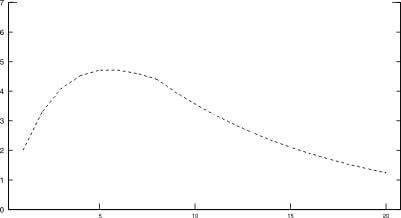
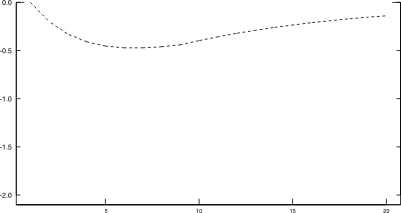
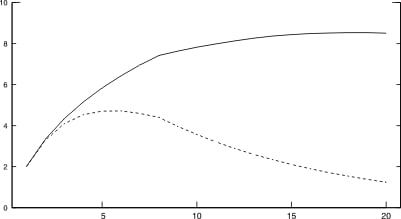
Figure 6 (a and b) shows such a comparison from an illustrative model in a joint paper with John C. Williams (Orphanides and Williams, 2005). As can be seen in Figure 6a, where inflation expectations are well-anchored, the adverse consequences of a supply shock are limited to a temporary hump in inflation and a mild slowdown. By contrast, as seen in Figure 6b, under the same policy but without well-anchored expectations, second-round effects of inflation follow the original adverse supply shock. If unchecked, these second round effects lead to a protracted stagflationary episode.
The ECB's policy strategy must be seen in exactly this context. This is why the Governing Council has taken a resolute stance against the materialization of broad-based second round effects in the euro area. Let me read you one pertinent paragraph from the Introductory Statement read by President Trichet at yesterday's press conference following our meeting:
"Against this background, it is imperative to ensure that medium to longer-term inflation expectations remain firmly anchored at levels in line with price stability. Broad-based second-round effects stemming from the impact of higher energy and food prices on price and wage?setting behaviour must be avoided. The Governing Council is monitoring price-setting behaviour and wage negotiations in the euro area with particular attention. All parties concerned – in both the private and the public sectors – must meet their responsibilities in this regard. The Governing Council has repeatedly expressed its concern about the existence of schemes in which nominal wages are indexed to consumer prices. Such schemes involve the risk of upward shocks in inflation leading to a wage-price spiral, which would be detrimental to employment and competitiveness in the countries concerned. The Governing Council calls for these schemes to be abolished".
The success of the strategy pursued by the ECB is intimately linked to the credibility of the institution and its record in achieving and maintaining well-anchored inflation expectations in the euro area since its founding 10 years ago.
Survey information on inflation expectations can be a valuable input in monitoring how well-anchored inflation expectations are. There are multiple dimensions that can be examined in this regard. One is to examine whether average expectations at various horizons remain close to the policymaker's price stability objective. Another is to assess the degree of consensus among forecasters about the outlook of inflation---that is a lack of disagreement. The ECB Survey of Professional Forecasters provides data that can be useful in illustrating these two dimensions for the euro area. The survey, which, among other things, collects information on the outlook of HICP inflation in the euro area, has been conducted quarterly since 1999.
Figure 7 shows the evolution of HICP inflation in the euro area together with the average one-year and five-year-ahead inflation expectations from the survey. Note that although one-year ahead expectations have edged up somewhat in the past few quarters, the figure suggests that professional forecasters do not expect the current deterioration in inflation to persist. Crucially, average five-year-ahead expectations have remained remarkably stable and very close to the ECB objective of keeping HICP inflation close to but below 2 percent, despite the deterioration in actual inflation.
I present this evidence as confirmation of the credibility of the ECB. But another piece of evidence that I find more striking can be found in examining the evolution of disagreement regarding point estimates of inflation expectations over the past decade.
Figure 8 presents the standard deviation of the inflation expectations of the individual forecasters at the one- and five-year ahead horizons since 1999. Notice that when the ECB started operating in 1999, there was greater disagreement about where inflation would be five years out than one year out. Over the past ten years, disagreement about inflation expectations one year out has moved about but without exhibiting any particular trend. By contrast, disagreement about five year-ahead expectations has trended down and is now considerably below that about one-year-ahead inflation. Relative to a decade ago, there is now very little disagreement about either the inflation objective of the ECB or about the determination of the Governing Council to succeed in keeping inflation close to its objective over time.
Looking even more closely at the evolution of the cross sectional distribution of five-year ahead inflation expectations provides further information about the convergence of forecaster beliefs. Figure 9, reproduced from a recent paper by Tsenova (2008), shows that until 2008Q2 the upper limit of the interquartile range of expectations was always equal to 2 percent while the lower limit, which was equal to 1.6 in the first survey, tended to trend up, reaching and staying at 1.9 percent since 2006. This suggests that forecasters may have increasingly tended to interpret the ECB price stability objective as inflation in the narrow range of 1.9 to 2 percent.
The figure, however, also shows that the distribution of these forecasts edged slightly upward with the last survey suggesting that some concerns expressed about the possibility that expectations might have become slightly less-well-anchored than in the recent past, may have been justified. It should be recalled, however, that this survey was conducted between 16-18 July 2008, when oil prices were very near their peak and the outlook for inflation most likely appeared most threatening to the professional forecasters. If so, and in light of the more recent retrenchment in oil prices, this slight deterioration likely was temporary. The next survey, to be conducted in mid-October, may help resolve this question.
Other measures of expectations from financial markets and household surveys point to slight improvements since mid-July. For instance, one indicator of long-term inflation expectations from financial markets is the five-year forward break-even inflation rate, which is derived by comparing zero coupon nominal and inflation-linked bond yields. Although an important part of the variation in break-even rates likely reflects changes in risk-premia, this indicator also contains useful information regarding inflation expectations. As can be seen in Figure 10, this break-even inflation rate eased somewhat in August from its elevated levels. With regard to households, Figure 11 shows the results of the European Commission's Business and Consumer Survey, including the latest observations from August. As can be seen, the latest survey recorded a welcome drop in both perceptions of current inflation as well as 12-month ahead inflation expectations.
In closing, let me return to the key elements of good policy practice in the current environment. That is, in my view, to continue to maintain well-anchored inflation expectations, indeed continue our focus on maintaining price stability over time. Allowing expectations to become unmoored from our price stability objective will be detrimental not only to price developments but also to employment and growth down the road. Our aim must remain to avoid this trap. Instead, we should always remember that by our continued focus on price stability we best contribute to sustainable and stable growth over time.
-------------------------------------------------------------
ENDNOTES:
(1) An early classic paper examining the effects of energy prices on capacity output is Rasche and Tatom (1977).
REFERENCES:
Burns, Arthur (1957) Prosperity without Inflation, New York: Fordham University Press.
Orphanides, Athanasios and John C. Williams (2005) "Imperfect knowledge, inflation expectations, and monetary policy", in B. S. Bernanke and M. Woodford (eds) The Inflation-Targeting Debate, Chicago: University of Chicago Press.
Rasche, Robert H. and John A. Tatom (1977) "The effects of the new energy regime on economic capacity, production, and prices", Federal Reserve Bank of St. Louis Review, 59(5): 2-12.
Tsenova, Tsvetomira (2008) "Are long-term inflation expectations in the euro area well anchored? Evidence from the Survey of Professional Forecasters", Mimeo.
FIGURE 1: Total and Core HICP Inflation in the Euro Area
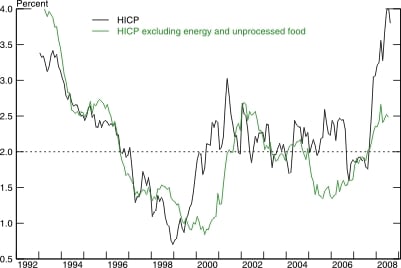
FIGURE 2: Price of Crude Oil
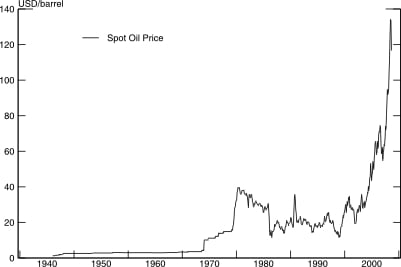
FIGURE 3: Comparing Three Episodes of Oil Price Increases
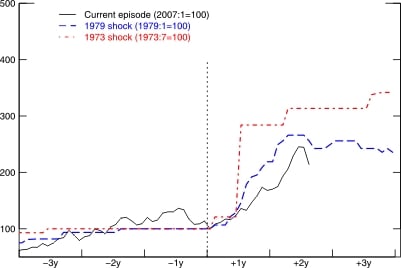
FIGURE 4: Evolution of ECB/Eurosystem Staff Euro Area Forecasts
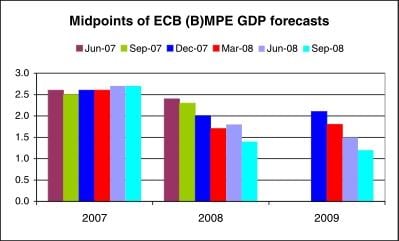
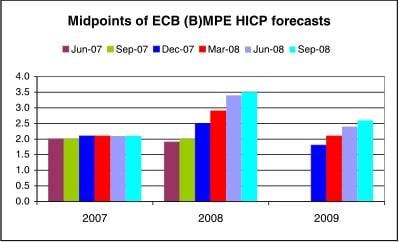
FIGURE 5: Evolution of Survey of Professional Forecasters
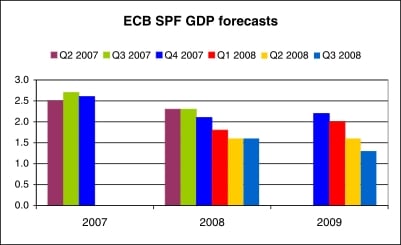
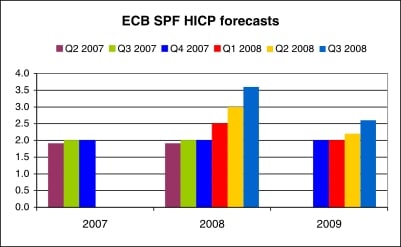
FIGURE 6: Evolution of Economy following a Supply Shock
a. Well-Anchored Inflation Expectations
Path for Inflation
Path for Output
b. Unanchored Inflation Expectations
Path for Inflation
Path for Output
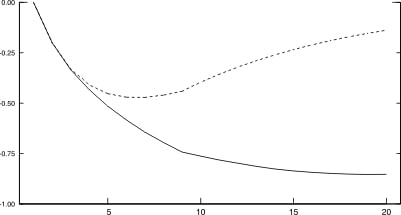
Note: Reproduced from Orphanides and Williams (2005).
FIGURE 7: Inflation Expectations in the Euro Area
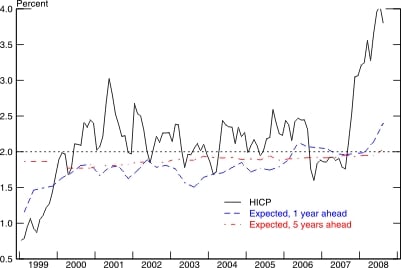
Note: Last observation from survey conducted between 16-18 July 2008.
FIGURE 8: Disagreement About Inflation Expectations
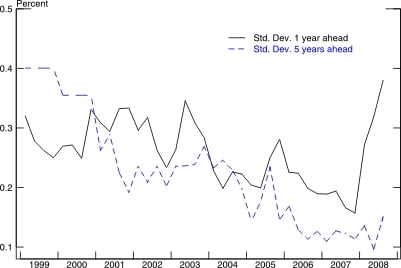
FIGURE 9: Distribution of Long-Term Inflation Expectations in the Euro Area
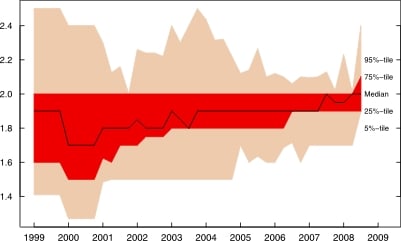
Note: Reproduced from Tsenova (2008).
FIGURE 10: Inflation and 5x5 Break-Even Rate in the Euro Area
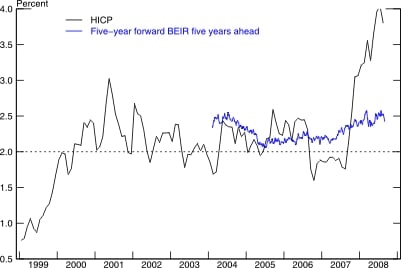
Note: Data through the end of August.
FIGURE 11: Household Inflation Perceptions and Expectations
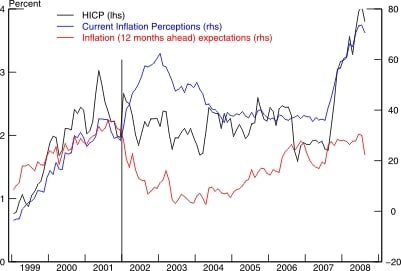
Note: European Commission Business and Consumer Surveys, last observation from August survey.